
When the power goes out, one of the first things many households wonder is: How long will the food in my fridge and freezer stay safe?

It’s a practical question, especially during hurricane season, when outages can last longer than expected. A portable power station can help keep certain essentials running, but even without one, there are simple steps you can take before and during an outage to help protect your food and make safer decisions.
Here’s what to know about keeping refrigerated and frozen food safe when the lights go out.
The 4-hour rule for refrigerators
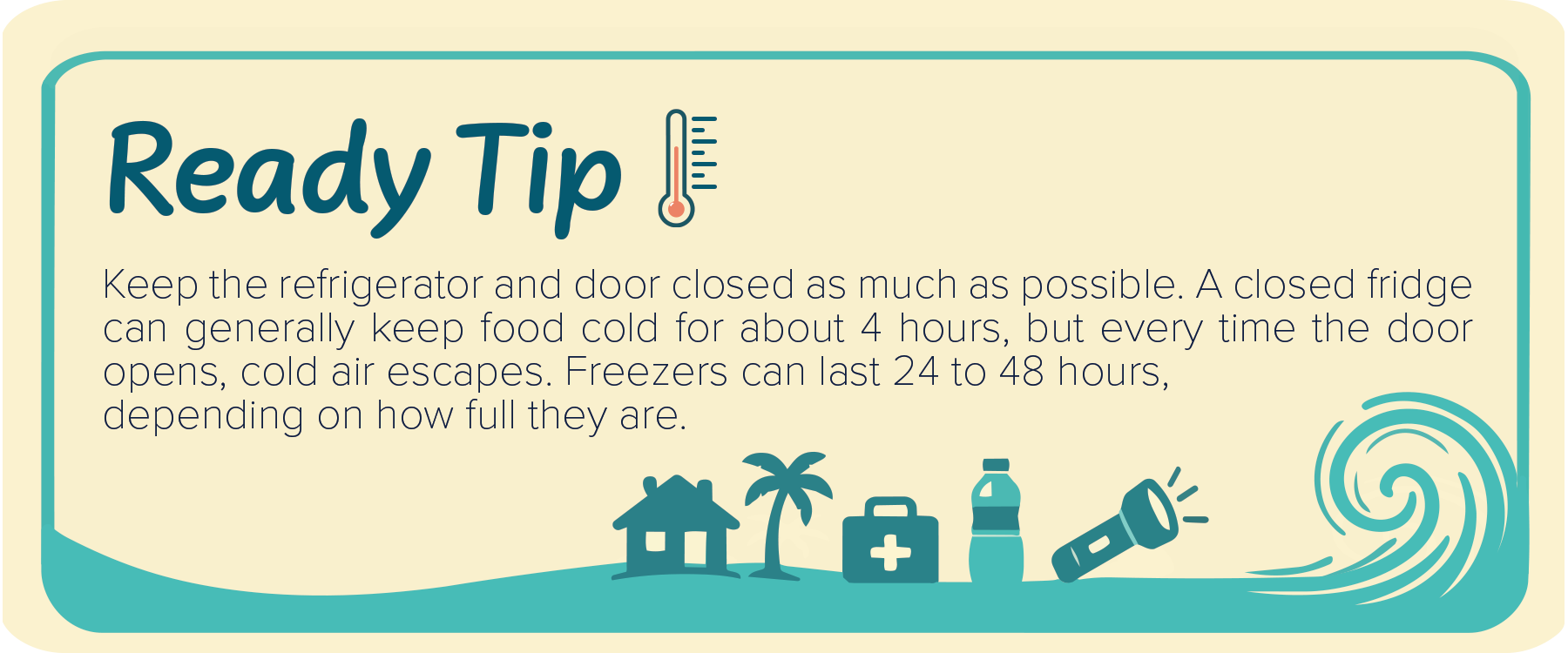
A refrigerator can generally keep food cold for about 4 hours during a power outage, as long as the door stays closed. After that, perishable foods such as meat, poultry, fish, eggs, milk, cut fruit, cooked vegetables, and leftovers may no longer be safe if they have been above 40°F for too long.
That means one of the best things you can do during the first few hours of an outage is simple: keep the refrigerator door closed as much as possible. Every time the door opens, cold air escapes and the temperature inside rises faster.
Freezers can give you more time
Freezers can usually keep food safe longer than refrigerators if the door stays closed. A full freezer can generally hold its temperature for about 48 hours, while a half-full freezer may hold its temperature for about 24 hours.
If frozen food still has ice crystals or has stayed at 40°F or below, it may be safe to refreeze or cook. However, appearance and smell are not reliable ways to tell whether food is safe. If you are unsure, the safest choice is to throw it out.
Use the space you have to buy more time
One advantage with hurricanes is that we usually have a few days to prepare. If you have extra room in your freezer, refrigerator, or cooler, you can use that space to help keep food colder longer if the power goes out.
A common tip is to freeze clean containers of water ahead of time. Gallon jugs, half-gallon bottles, and smaller water bottles can all work, depending on how much space you have. These frozen containers help fill empty freezer space, act like large ice packs, and can later be moved into the refrigerator or a cooler if needed. The FDA and USDA recommend freezing containers of water, gel packs, or ice ahead of an outage to help keep food cold.
If you own a hard-sided, well-insulated cooler, such as a YETI-style cooler or similar rotomolded cooler, you can also make it part of your plan. Before the storm arrives, pre-chill the cooler with ice, frozen water bottles, or frozen gel packs. If the power is out for more than a few hours, you can move frequently used refrigerated items into the cooler so you are not opening the refrigerator over and over. Food kept in a cooler still needs to stay at 40°F or below to remain in the safe range.
For freezers, fullness matters. A full freezer can generally hold its temperature for about 48 hours if the door stays closed, while a half-full freezer may hold for about 24 hours. If your freezer has empty space, filling it with frozen water bottles before the storm can help it stay colder longer.
The key is to think ahead: freeze what you can, group frozen foods together, keep doors closed, and use coolers to reduce how often you need to open the fridge or freezer.
What to do before a storm
A little preparation can help your food stay colder longer if the power goes out:
- Keep appliance thermometers in your refrigerator and freezer. Refrigerators should be at 40°F or below, and freezers should be at 0°F or below.
- Freeze containers of water ahead of time. Frozen jugs or bottles can help keep your freezer, refrigerator, or cooler cold during an outage.
- Keep your freezer as full as reasonably possible. A fuller freezer stays cold longer than one with a lot of empty space.
- Group frozen foods together. Keeping items packed close together helps them stay cold longer.
- Freeze items you may not need right away. If a storm is approaching, consider freezing items like fresh meat, poultry, leftovers, or milk to help them stay at a safe temperature longer.
- Have a cooler and ice packs ready. If the outage lasts longer than 4 hours, a cooler with ice or frozen gel packs can help keep certain refrigerated foods at 40°F or below.
What to do during an outage
During a power outage, try to avoid “checking” the refrigerator too often. Instead:
- Keep refrigerator and freezer doors closed.
- Use a cooler with ice or frozen gel packs if the outage lasts longer than 4 hours.
- Check appliance thermometers when power comes back.
- Throw out perishable food that has been above 40°F for 2 hours or more.
- When in doubt, throw it out.
It can feel frustrating to throw away food, especially after already dealing with the stress of a storm, but foodborne illness can create an even bigger problem for your household. Federal food safety guidance emphasizes that you should never taste food to determine whether it is safe. If you are unsure, it is better to discard questionable food than risk getting sick.
A portable power station can help
A portable power station, often called a PPS, can help extend the life of certain refrigerated or frozen foods by keeping a refrigerator, freezer, or cooler running for part of an outage. How long it lasts depends on the size of the PPS, the appliance’s power draw, how often the appliance cycles on and off, and what else is plugged in.
If you missed our previous posts in the Ready Together series, we covered:
- how portable power stations idle draw impacts fridge backup time, and
- how to choose a PPS based on your household’s emergency needs.
Those posts can help you better understand what size PPS may make sense if your goal is to keep essentials like a refrigerator, freezer, phone, medical device, fan, or internet equipment running during an outage.
If backup power feels out of reach, let’s talk story
Emergency preparedness can be expensive, and not every household is in a position to purchase a portable power station, solar panel, cooler, or backup equipment all at once. If you’re trying to prepare but the upfront cost feels like a barrier, Lōkahi Federal Credit Union may be able to help you explore financing options that fit your budget.
Stop by a branch or give us a call at 808.440.5380. Let's talk story and see how we can make your upgrade purchase as painless as possible.
Ready Together, one step at a time
Power outages are stressful, but knowing the basics can help you make safer decisions. Keep your fridge and freezer closed, use thermometers when possible, move food to a cooler if needed, and remember the key timeline: 4 hours for a closed refrigerator, 24 hours for a half-full freezer, and 48 hours for a full freezer.
Preparedness is not about doing everything perfectly. It’s about helping your household feel a little more ready, one step at a time.
Sources and Disclosures
Food safety timing and temperature guidance in this article is based on publicly available information from the U.S. Food and Drug Administration, U.S. Department of Agriculture Food Safety and Inspection Service, FoodSafety.gov, and the Centers for Disease Control and Prevention. These agencies generally advise keeping refrigerators at 40°F or below, freezers at 0°F or below, keeping refrigerator and freezer doors closed during an outage, discarding refrigerated perishables after 4 hours without power or another cold source, and using the “when in doubt, throw it out” rule when food safety is uncertain.
This article is for general educational purposes only and is not a substitute for official emergency instructions, food safety guidance, or public health guidance. Always follow instructions from local emergency management officials, utility providers, and public health agencies.
Product names and trademarks, including YETI, are the property of their respective owners. Any reference to a product type or brand is for general informational purposes only and does not imply endorsement, sponsorship, affiliation, or recommendation by Lōkahi Federal Credit Union.
All loans are subject to qualifications and approval. Certain terms and conditions apply. Lōkahi FCU membership required. Rates, terms, conditions, and available loan products are subject to change without notice.